How to Prepare Your Northern Illinois Home for the Spring Selling Market
Spring is traditionally the most active real estate season in Northern Illinois. Buyers emerge after winter with renewed motivation, inventory begins to rise, and homes that are properly prepared tend to sell faster and for stronger prices. For homeowners considering a spring listing, the most successful outcomes begin with preparation well before the first showing.
Here is a practical, market-informed guide to getting your home ready to sell this spring.
Start Early: Winter Preparation Pays Off
In Northern Illinois, winter weather can delay exterior work and contractor availability. Beginning your preparation in late winter allows you to address key items before buyer activity peaks. Sellers who are ready to list as soon as weather and market conditions align often benefit from less competition and more buyer urgency.
Focus on Curb Appeal After a Long Winter
Winter can be hard on exteriors. Once temperatures allow, address the visible signs of seasonal wear:
Power wash siding, walkways, and driveways
Clean gutters and downspouts
Refresh mulch and trim landscaping
Repair cracked concrete, loose railings, or damaged fencing
Buyers form their first impression within seconds. A clean, well-maintained exterior signals that the home has been cared for.
Declutter and Depersonalize
Spring buyers are looking for light, space, and possibility. Begin by removing excess furniture, packed closets, and personal items. This not only makes rooms feel larger but also allows buyers to envision themselves in the home.
If needed, consider temporary storage. A streamlined home consistently photographs better and shows better.
Address Deferred Maintenance
Buyers in today’s market are cautious and often sensitive to condition issues. Small problems can raise unnecessary concerns. Prior to listing:
Fix leaky faucets and running toilets
Repair cracked tiles, loose doors, or damaged trim
Replace burned-out bulbs and aging smoke detectors
Service HVAC systems and replace filters
Proactively handling these items reduces the risk of inspection objections later.
Refresh, Don’t Renovate
Major renovations are rarely necessary to sell successfully. Strategic updates often provide a better return:
Neutral paint in high-traffic areas
Updated light fixtures where dated
Clean or replace worn carpeting
Professional deep cleaning throughout the home
In Northern Illinois, buyers value move-in-ready homes, especially during busy spring months.
Prepare for Spring Light
As days get longer, natural light becomes a selling feature. Wash windows inside and out, replace heavy winter drapery with lighter coverings, and ensure blinds function properly. Bright homes photograph better and feel more welcoming during showings.
Pricing and Timing Matter
Preparation should always be paired with a thoughtful pricing strategy based on current local data. Spring markets can move quickly, but overpricing remains one of the most common mistakes. Working with a local professional who understands neighborhood-specific trends in Northern Illinois is essential.
Plan for the Transition
Selling in spring often means buying or moving shortly after. Early planning for your next step—whether upsizing, downsizing, or relocating—reduces stress and allows for stronger negotiating positions.
Final Thought Homes that sell well in the Northern Illinois spring market are rarely accidental successes. They are the result of early planning, thoughtful preparation, and informed guidance. If you are considering selling this spring, now is the time to start the conversation and put a clear plan in place.
If you would like a personalized preparation checklist or a market evaluation for your home, I would be happy to help.
Finding a starter home in today’s housing market can seem like searching for a needle in a haystack.
Over the past five years, rapid home value appreciation, fierce competition, and high mortgage rates have made it tough for first-time buyers to break into the market. But there’s good news: The tide is turning.
“Starter home inventory has almost fully recovered relative to pre-pandemic, and actually represents a larger share of all homes compared to 2020,” says Hannah Jones, senior economic research analyst at Realtor.com®.
If you’ve been waiting on the sidelines of the housing market, now might be the time to jump back in. Here’s how to find the elusive starter home.
What is a starter home?
In the simplest terms, a starter home is exactly what it sounds like: someone’s first home. They’re best described as no-frills, affordable houses that help individuals and families get their foot in the door of homeownership.
When they originally hit the market in post-World War II America, they were mass-produced two-bedroom homes with one bathroom. Today, they can best be described as any small single-family home that is move-in ready with an affordable price tag.
That price tag is where things get tricky.
“Many of the homes that used to fall into [the starter home] category are now priced higher due to appreciation,” says Brett Johnson, a licensed real estate agent based out of Englewood, CO. “And the ones that do remain tend to need work, which can be a deal breaker for first-time buyers who don’t have the cash for renovations.”
With millennials well into the homebuying age and Gen Z entering the market, there’s no shortage of demand for these houses. So, where have all the starter homes gone?
Why builders hesitate to invest in starter homes
Those looking for answers about the housing crisis have looked first at the trends of new construction. There was a precipitous drop-off in the construction of new two-bedroom starter homes in the aftermath of the 2007–08 financial crisis.
While it might be easy to point fingers at builders, there’s a very good reason why there was such a sharp decline in the construction of small starter homes—and a steady uptick in larger ones.
“Labor and material costs are always an issue in the cost of housing,” says Ryan Starr, an architect based out of Bend, OR. “But there are a couple of often overlooked things that are much more influential in driving costs: land costs and infrastructure.”
Between 2012 and 2017, the price of residential land rose almost four times as fast as inflation, according to research from the Joint Center for Housing Studies of Harvard University.
“In order to develop them … we need to replace and upgrade existing infrastructure one street at a time. These small infill projects can’t absorb that kind of cost, so they wither on the vine and are canceled,” explains Starr.
While these issues persist in larger homes, builders can spread expenses out over a larger area, resulting in a lower cost per square foot and a higher profit margin.
More headwinds for starter homes
But now, even large-scale home developments might be at risk, adding more pressure to the already strained starter home market. Proposed tariffs on essential building materials like lumber, aluminum, and steel risk driving up construction costs even further.
As the importers of these materials, builders must absorb these costs or pass them on to buyers—further reducing the supply of affordable, entry-level homes.
It’s time to bring back starter homes
Ironically, the starter home is an invention of a housing shortage. The originator, William Levitt, developed the concept to meet demand from World War II veterans, who were beginning the baby boom and had access to affordable mortgages through the GI Bill.
If we look to the children of this generation as a sign of what we gain from investing in affordable housing for America’s young families, the payoff is clear: Baby boomers now own 38% of America’s housing inventory and hold $83.5 trillion of wealth.
An investment in starter homes is an investment in the economic upward mobility of generations to come. But homebuilders will need help (and some big incentives) if they’re going to shoulder the burden of jumpstarting the American dream.
In Starr’s words, “Yes, labor and materials cost more, but they are not the be all, end all to this cost issue for housing. We need a fundamental rethinking of how we develop land and provide housing.”
How to find a starter home in your area
Even though they’re harder to find, starter homes are still out there. Here’s how to find them:
Step 1: Define your budget
Before you hit the market and fall in love with a home, set a budget. This will help you focus your search and save yourself from heartbreak.
Use an online mortgage calculator to estimate what you can afford based on your income, savings, and debt-to-income ratio.
Step 2: Get pre-approved for a mortgage
There’s still steep competition for starter homes, and having pre-approval shows sellers that you’re serious about buying. This can give you an edge in multiple-offer situations.
Contact several mortgage lenders or use online services to compare mortgage rates and loan amounts. Remember, even a slightly lower interest rate can save you thousands over the life of your mortgage.
Step 3: Search online
Use online listing services to explore available properties. To narrow your search, apply filters that align with your needs. These sample filters can help get you started:
Refining your criteria will help you focus on homes that match your lifestyle and budget. Be sure to set up email alerts so you’re notified as soon as new properties hit the market. Timing is critical, especially in competitive areas.
Step 4: Collaborate with your agent
Your agent will be your greatest ally when searching for a starter home. It may be your first time on the market, but they’ve likely done this dozens or hundreds of times before.
Throughout the process, try to keep an open mind—your agent might suggest homes that don’t check every box but have the potential to become the perfect fit. Trust their knowledge of the local market, and don’t hesitate to ask questions about pricing trends, neighborhood amenities, and resale value.
Cities with the most starter homes in America
If you’re stuck looking for a starter home in your neighborhood, it might be time to move.
“Southern markets, such as Houston and Atlanta, boast high levels of starter home inventory, as well as prices below the national norm,” says Jones. “In general, small, affordable home inventory has built up significantly in the South, offering options for buyers hoping to achieve homeownership this year.”
These cities have the most starter homes for sale:
Ask any homeowner about what they would like to change about their home, and most will say, “How much time do you have?
Home improvements (cue Tim Allen) or home remodeling projects can stem from a variety of motivations, like preparing your home to put on the market, adding space for a growing family, addressing outdated features or aesthetics, or fixing structural/functional issues with the home.
However, when it comes to home remodeling projects, too many people assume their project will proportionally increase the value of their home. Few actually consider the complete scope of return on investment (ROI), taking into account not only potential impact on resale value but also the total costs of time, labor, and materials. Some renovations may provide more “quality of life” ROI by improving comfort and aesthetics without significantly impacting resale value, while others can deliver notable financial returns.
Whether you’re looking to upgrade your living space, increase the equity of your home, or trying to make some quick changes to improve your resale price, here are four remodeling projects with the highest ROI and some tips on how to get them done.
Top 4 Home Remodeling Projects with the Highest ROI
Before diving into specific projects, it’s important to understand how the data supporting these ROI estimates was gathered. This article references findings from the 2024 Cost vs. Value Report conducted by Zonda Media, a reputable research firm in the real estate and construction industries. The report’s ROI figures are based on national averages for both the cost of materials and labor, which means that regional differences may lead to variations in actual returns.
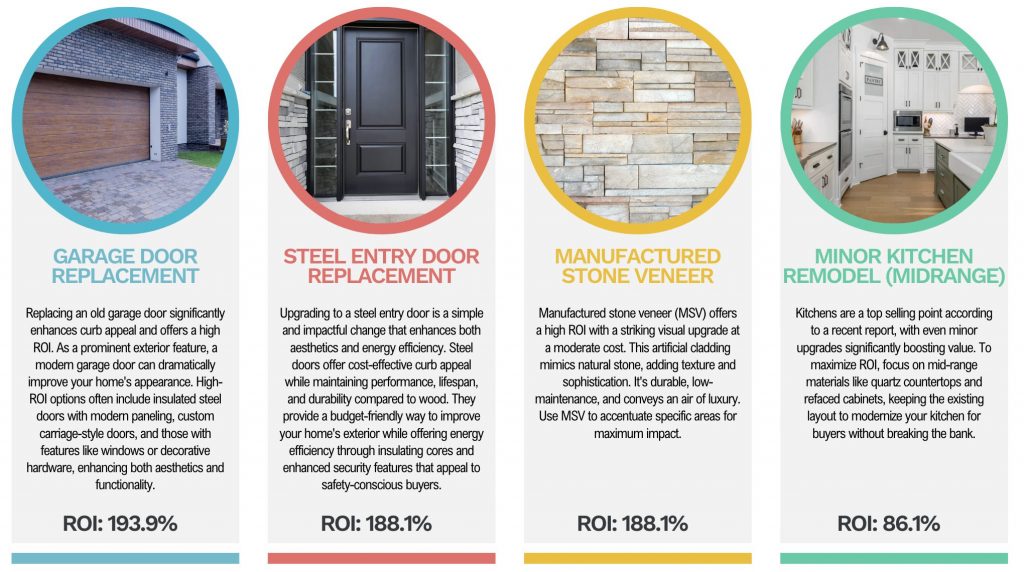
1. Garage Door Replacement
Job Cost: $4,513
Resale Value: $8,751
ROI: 193.9%
Replacing an old garage door is one of the simplest ways to dramatically boost your home’s curb appeal—and it happens to deliver the highest ROI of any remodeling project. The impact is largely due to the prominent visual space a garage door occupies on a home’s exterior. A sleek, modern garage door can make your entire facade look fresher and more attractive to buyers.
Garage doors with the highest ROI include insulated steel doors with modern paneling, custom carriage-style doors, and those featuring windows or decorative hardware. These options not only enhance the home’s exterior aesthetics but also improve functionality and energy efficiency.
2. Steel Entry Door Replacement
Job Cost: $2,355
Resale Value: $4,430
ROI: 188.1%
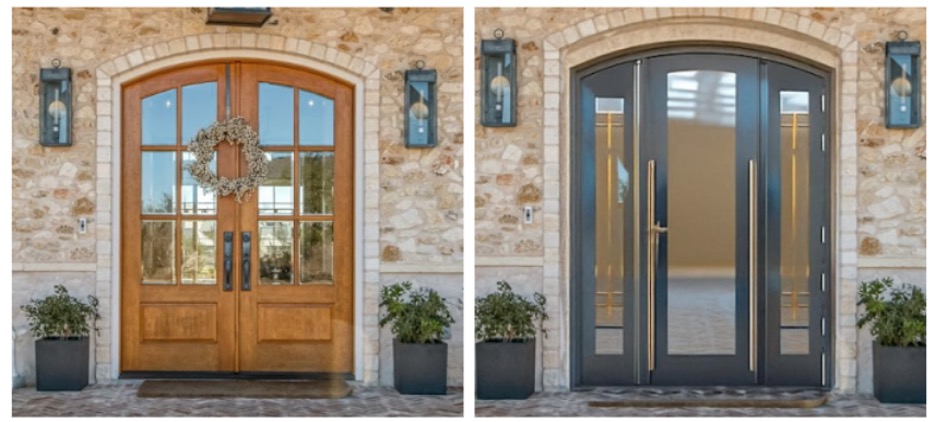
Upgrading to a steel entry door is a simple yet impactful change that can drastically improve both the look and energy efficiency of your home. Steel doors cost less than wood ones, giving you a cost effective way to make a big impact on the curb appeal of a home, without sacrificing performance, life span, or durability.
Why It Works:
Cost-Effective Curb Appeal: Steel doors are less expensive than wood but provide a similar aesthetic boost. This makes them a budget-friendly way to enhance a home’s exterior.
Energy Efficiency: Many steel doors come with insulating cores, which can help keep your home comfortable year-round and lower energy bills.
Increased Security: Steel doors are harder to break into, providing an added layer of safety that appeals to security-conscious buyers.
3. Manufactured Stone Veneer
Job Cost: $11,287
Resale Value: $17,291
ROI: 153.2%
Manufactured stone veneer (MSV) is a high-ROI project because it delivers a striking visual upgrade at a relatively moderate cost. MSV is an artificial cladding material designed to mimic the look of natural stone, making it a cost-effective way to add texture and sophistication to your home’s exterior.
Why It Works:
Strong Visual Impact: Stone veneers add depth and elegance, creating an upscale appearance that can significantly boost curb appeal.
Durability and Low Maintenance: Unlike natural stone, MSV is lightweight, easier to install, and resistant to wear and tear.
Perceived Value: Even though it’s a faux material, MSV adds an air of luxury and craftsmanship that can make your home more appealing to buyers.
Pro Tip: Use manufactured stone veneer to accentuate specific areas, such as around the entryway or along the lower portion of the facade, for maximum visual impact without overspending.
4. Minor Kitchen Remodel (Midrange)
Job Cost: $27,492
Resale Value: $26,406
ROI: 96.1%
According to Homelight’s “Top Agent Insights End of Year 2024 Report”, “88% of agents say that upgraded kitchens and appliances are one of the best selling points for homes”–a significant increase from the previous year. https://homelightblog.wpengine.com/wp-content/uploads/2024/12/homelight-top-agent-insights-end-of-year-2024-report.pdf
The trick to ROI with a kitchen remodel is the budget, and how you decide to balance what to upgrade, the quality of materials, and how much to work within the existing layout. For example, you can make a big impact with less expense if you keep your current cabinet boxes but upgrade the doors and hardware. However, if you strike that balance, you can recoup much of your investment. If you’re looking to sell, an updated kitchen will appeal to buyers, which can also help your home stand out and sell faster.
Why It Works:
High Buyer Interest: Kitchens are a focal point for most buyers, so even modest improvements can make a significant impact.
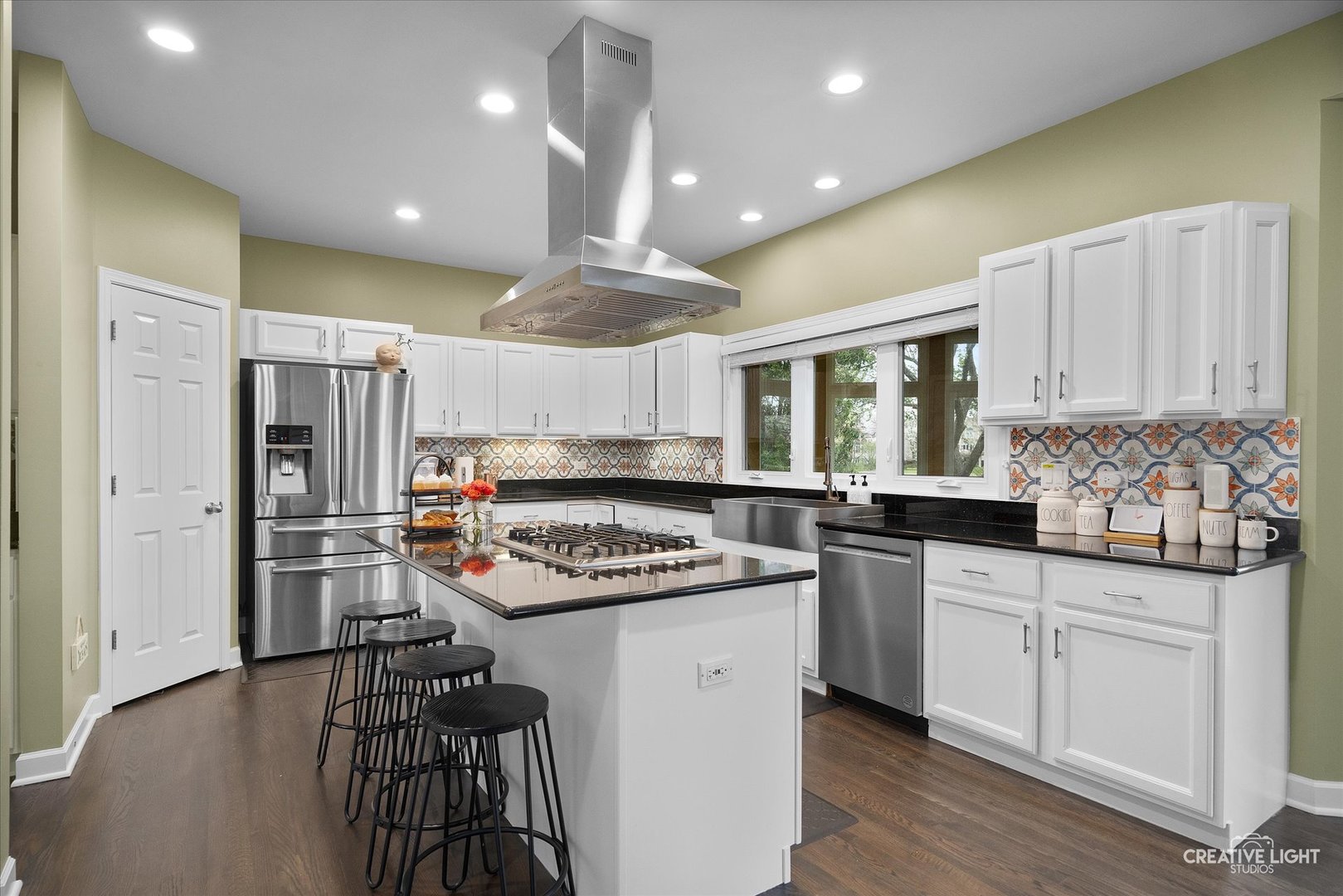
Affordable Upgrades: By focusing on midrange materials—such as quartz countertops, midrange appliances, and refaced cabinets—you can keep costs manageable while still delivering a fresh look.
By keeping the existing layout and avoiding costly structural changes, you can modernize your kitchen while keeping costs down.
Key Takeaways for Homeowners
7 out of the 10 best ROI projects all have to do with improvements to the exterior of your home, which makes one thing very clear: Boosting the curb appeal of your home in a cost-effective manner will give you the best ROI if you’re thinking about selling this year.
If you look at the current housing market, you can start to see why that is. In the post-pandemic frenzy, buyers had to accept whatever they could find. However, housing inventory has increased over the last couple of years, giving buyers more options. Additionally, due to high-interest rates and affordability issues, the current market favors older, move-up home buyers who are sitting on equity, and these buyers can afford to be pickier about the home they buy.
You can see these trends play out in the “Top Agent Insights End of Year 2024 Report” conducted by HomeLight:
Given these trends, it’s no wonder that the remodeling projects with the best ROI are those that make the home stand out from other homes in the area and leave a strong impression with potential buyers.
Conversely, the projects with the lowest ROI involve major remodels or upscale materials. Anytime you alter the footprint of a home—such as by moving walls or adding square footage—you’ll incur higher costs and lower returns. Unless you’re a general contractor or a skilled DIYer, these high-end renovations typically aren’t worth it from a purely financial perspective. The one caveat is if you’re in a market where high-end appliances and materials are the rule not the exception.
How to Get Started on a Remodeling Project
Starting a remodeling project can feel overwhelming. Here’s how to set yourself up for success:
1. Outline Your Project Goals:
Before you dive into the nitty-gritty of remodeling, take a step back and clarify what you hope to achieve.
Are you remodeling to improve aesthetics? To improve functionality or comfort for your family? To prepare your home for the market or boost your resale value? Is it an essential repair? After you decide on why you’re doing it, you can take a step back and decide what is worth the cost to you.
2. Get inspired:
Take time to gather ideas and give shape to your vision. Whether you’re updating a single room or tackling a whole-house remodel, these resources can inspire you:
Houzz – A go-to platform for home remodeling ideas, complete with photos, product links, and even local contractor recommendations.
Pinterest – Create mood boards for different rooms by pinning your favorite designs and layouts. You can also add ‘-pinterest’ to Google searches to find more targeted boards and collections of remodeling ideas on Pinterest.
This Old House – Packed with articles, videos, and guides on home renovation projects, from DIY fixes to large-scale remodels.
YouTube Channels: Follow popular home renovation YouTubers who share real-life projects, product reviews, and practical tips.
Visit Local Showrooms: You can visit the showrooms or warehouses from local manufactures for ideas on fixtures, cabinetry, and counter tops.
Open Houses – Stop by open houses in your area to get a feel for what’s popular and what other homeowners have done.
Local Remodeling / Contractor Websites: Many will post galleries and before/after images of their renovations, and these galleries can be a goldmine for practical remodeling ideas!
3. Prioritize your wants vs. needs:
Once you’ve gathered ideas, it’s time to separate the essentials from the extras.
Must-Haves: These are the non-negotiable items—structural fixes, code-compliance upgrades, or critical repairs.
Nice-to-Haves: These are aesthetic choices or features that you’d like to include if your budget allows.A prioritized list will help you make tough decisions if costs start to climb or timelines get tight.
4. Create a scope and timeline:
Clearly defining what’s included (and excluded) in your remodel is critical for staying on schedule and within budget.
What’s Included: Are you only updating finishes and fixtures, or are you changing the layout and moving walls?
Project Phases: If you’re remodeling multiple areas, consider breaking the project into phases to manage timelines more effectively.
Expected Timelines: Be realistic about how long the project will take, especially if you’re working around major life events or seasonal weather.
5. Set a realistic budget: Start by researching the typical costs for your specific type of remodeling project in your area. Resources like Remodeling Magazine’s Cost vs. Value Report, HomeAdvisor, and NAHB provide national and regional averages for popular renovations like kitchens, bathrooms, and additions.
6. Include a Contingency Fund:
Even with thorough planning, unexpected costs seem to always arise. Many experts recommend setting aside 15% – 30% of your total budget for contingencies.
7. Research contractors & Get Multiple Quotes:
If you’re hiring contractors, request at least three detailed quotes to compare prices and scope of work. Make sure to clarify what’s included in each quote to avoid misunderstandings. And use your checklist below for some tips on hiring a contractor!
Checklist for Hiring a Contractor
Finding the right contractor is crucial for a successful remodeling project. Here’s a quick checklist to help you hire the right professional:
Get recommendations from friends, family, neighbors, and your real estate agent. Word of mouth is one of the most reliable ways to find a trusted contractor. Ask people you trust about their experiences and if they would hire the contractor again. After you have a recommendation, you can also search for reviews online.
Check credentials, licensing, and insurance. Verify that the contractor is licensed to work in your state. Most states have an online database for checking contractor licenses. You can also look for contractors certified by reputable organizations, such as the National Association of the Remodeling Industry (NARI).
Review past projects and ask for client references. Ask to see a portfolio of previous projects similar to yours. Pay attention to the quality of work and whether their style aligns with your vision.
Request detailed bids from multiple contractors. Ask for written estimates that break down costs into categories such as labor, materials, permits, and any additional fees. Compare bids carefully to ensure all contractors are quoting on the same scope of work.
Ensure the contract includes a clear scope of work, timeline, and payment terms.
Check references – A reputable contractor should have no issue providing references. Contact past clients and ask about their experience.
Avoid red flags
Unusually Low Bids: If a bid is significantly lower than others, it could indicate corner-cutting or hidden costs.
Pressure to Pay Upfront: A small deposit is normal, but never pay the full amount before work begins.
Lack of Written Contract: Never agree to verbal agreements only.
Poor Communication: If a contractor is difficult to reach or dismissive during the bidding process, this may continue during the project.
Conclusion
Whether you’re updating your home to sell or simply want to enjoy a more modern space, focusing on high-ROI projects is a smart strategy. From replacing your garage door to enhancing your home’s exterior with stone veneer, these upgrades can boost both your home’s value and appeal.
Curious about what features are popular in your neighborhood? Thinking of moving and wondering what remodeling projects, if any, you should do before listing? Want recommendations on contractors? I’m happy to help!
Kathryn Hoffman, Broker AssociateKathryn Hoffman is the committed agent you’ve been looking for. I promise to listen to your concerns and keep you informed of the nuances in our local market so you can reach all of your real estate goals. Reach out today for help with your home buying, selling, or investing needs!


 Facebook
 X
X
 Pinterest
 Copy Link